NRG shuts academy, third to close before 2027
the third case after Korea and Americas, as the new 2027 format moves player development outside the teams
This article was machine translated from the Japanese original. Quotes were translated too, so they are not the speaker's exact words. Where anything reads oddly, the Japanese version is authoritative. Read the Japanese original →
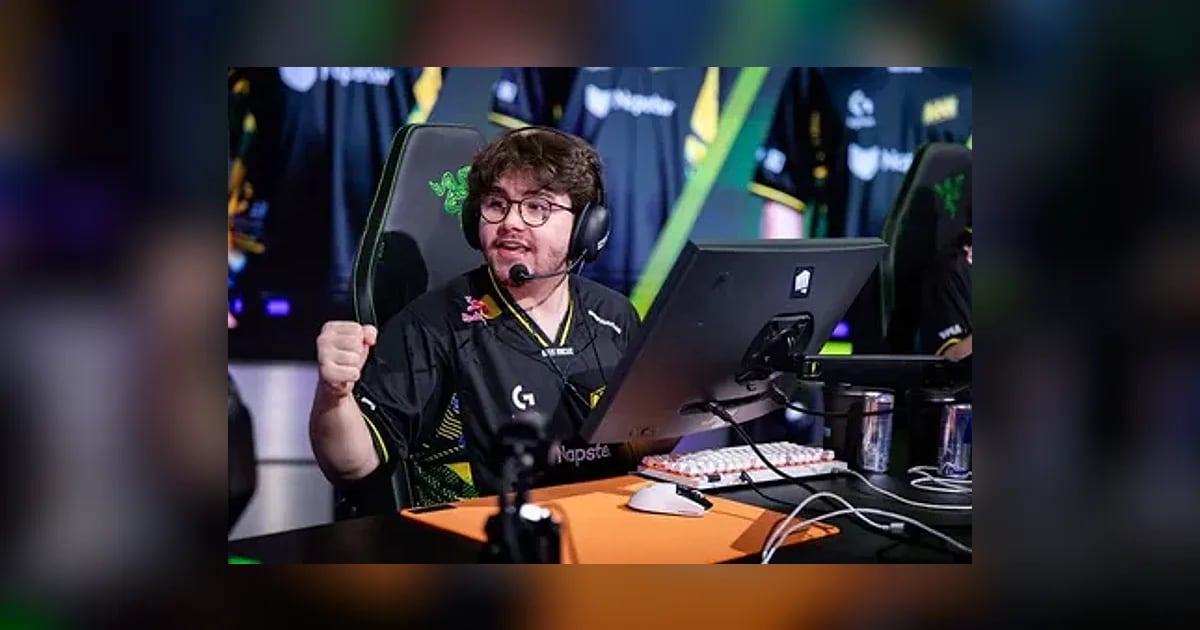
chloric · © 2025 Riot Games, Inc. · Michał Konkol / Flickr · via Liquipedia
NRG announced the end of its academy division on August 30. The statement cites the VCT format changes coming in 2027. The same move happened at KRÜ Esports on July 22 and at Gen.G on August 1, meaning academies in three regions have disappeared in three months. Meanwhile, VCT CN opened its club certification window on August 26. The framework for developing players is shifting from inside the teams to the competition side.
NRG has folded an academy it only launched this year
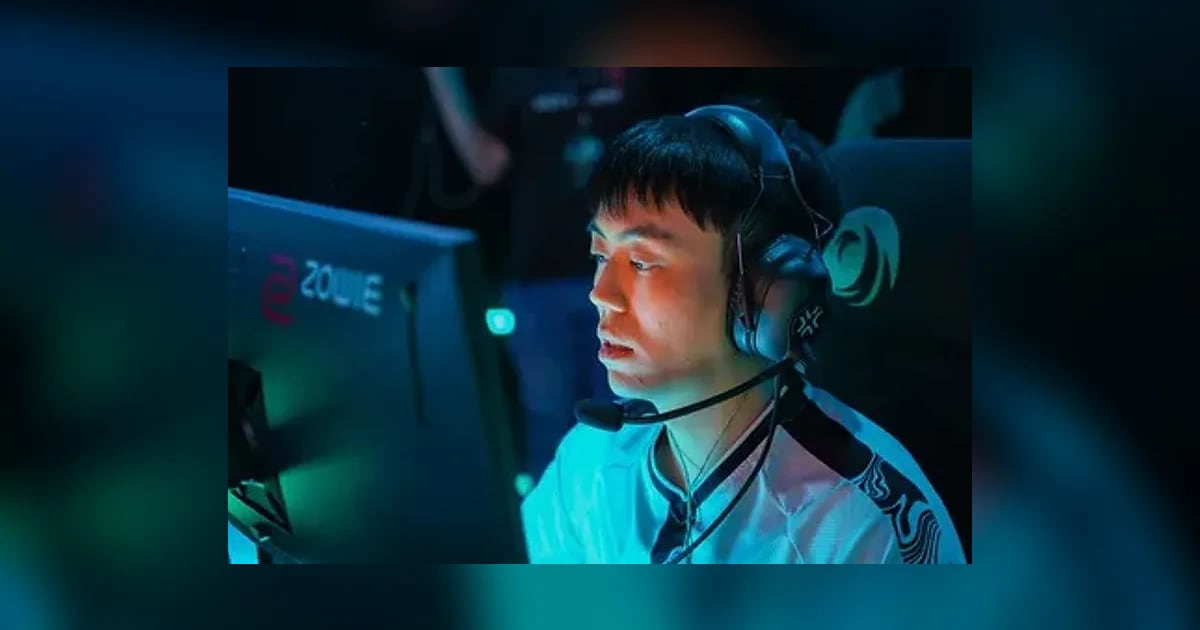
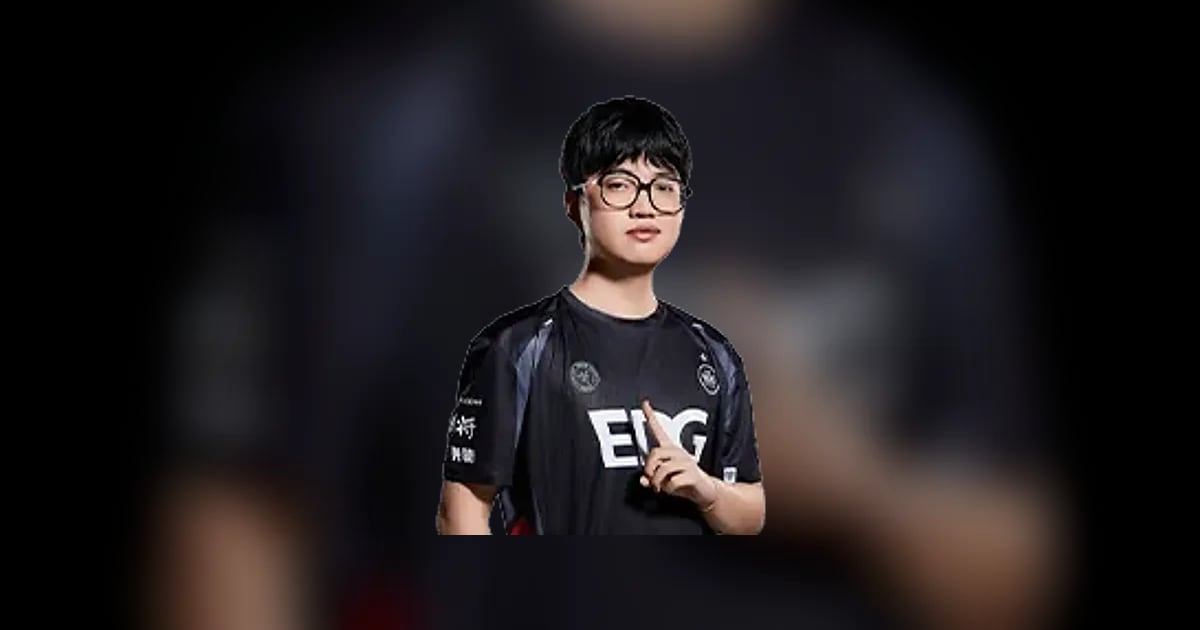
NRG announced the end of NRG Academy on August 30. The program launched in early 2026 as a partnership with Maryville University, so it closed in less than a year. The final roster was five players and two coaches. It produced one VCT player, chloric, who moved to Natus Vincere in EMEA. The team's best result was fourth place at Challengers North America ACE Stage 3.
We're excited about the changes coming to VCT next year. But those changes also narrow the room to operate around an academy roster. Going forward, we'll look for other ways to support the collegiate scene and the talent pipeline (NRG statement)
| Category | Name |
|---|---|
| Player | haeyoday |
| Player | renz |
| Player | Ange |
| Player | geeza |
| Player | Shondex |
| Head coach | mCe |
| Assistant coach | zelo |
Academies in three regions have disappeared in three months
KRÜ Esports scaled back the KRÜ SPARK framework on July 22. Two players left as their contracts expired, while tkzin, benG, phc and mont1 remain in the development program as candidates for the main roster. Gen.G announced the end of its contracts with four academy players on August 1. Gen.G is considered the first major Korean club to let go of its academy; the T1 and DRX academies were still running as of August 1.
Our goal as a club is still to develop talent from Latin / South America. We will support our players' growth and create opportunities for them to move up to the next level (KRÜ Esports statement)
| Organization | Region | Announced | Details |
|---|---|---|---|
| KRÜ Esports | Americas | July 22 | KRÜ SPARK scaled down to a development program, four players retained |
| Gen.G | Korea | August 1 | Contracts with four academy players ended |
| NRG | North America | August 30 | Academy division shut down |
The 2027 format cuts partner slots from 12 to 8
Riot published the 2027 structure on June 18. Partner slots in Americas, EMEA and Pacific drop from 12 to 8, and China also moves to 8. The week-to-week league season disappears, replaced by a run of events: Kickoff, regional Cups, Masters and Champions. Each region's Kickoff has 12 teams — 8 partners plus 4 from open qualifiers. The biggest difference from the current system is that being a partner no longer guarantees a spot at the top-level events.
| Item | 2026 | 2027 |
|---|---|---|
| Partner slots in Americas, EMEA and Pacific | 12 | 8 |
| Regular season | League play (Stage 1 / Stage 2) | A run of Kickoff and Cups |
| Entry from below | Challengers into Ascension | Four slots from open qualifiers into Kickoff |
Non-partner teams get direct payments
The 2027 design includes fixed payments for teams outside the partner list: 100,000 dollars for competing at a Kickoff or a Cup, 200,000 at Masters, 400,000 at Champions and a further 100,000 at the Game Changers Championship. Alongside that, open-slot and creator organizations get continuity rules that let them carry over points and qualification as long as they keep three of their starting five.
| Milestone | Guaranteed amount |
|---|---|
| Kickoff / Cup appearance | 100,000 dollars |
| Masters appearance | 200,000 dollars |
| Champions appearance | 400,000 dollars |
| Game Changers Championship appearance | An additional 100,000 dollars |
China is building a different entry point through certification
VCT CN is holding its second round of club certification applications from August 26 to September 16. It runs in two stages — an online review and an offline certification covering the organization and its members — and certification is revoked if a club stops meeting the criteria. Certified clubs can enter the pro track of the national competition and bank points toward Ascension in 2027. The top clubs face VCT CN league teams at the Evolution Cup. China's 2027 Kickoff will be 8 partners plus 2 Ascension invites and 2 from open qualifiers.
To raise the overall quality and competitive level of the players on clubs in the CN region, and to bring new strength to the long-term development of the region's Valorant scene (VCT CN explanation)
In Japan, the door to development is opening instead
QT DIG∞ announced on X on August 1 that it was recruiting practice trainees for its VALORANT division — the same day Gen.G announced the end of its contracts with four academy players. It is aimed at people who “seriously want to go pro” and “want to take on the competitive scene,” with applications accepted through a Google Form. The team had just won VALORANT Challengers Japan 2026 for the first time on July 27 and advanced to VCT 2026 Pacific Stage 2; the wording of the announcement calls the team “the number one team in Japan.”
That said, the word QT DIG∞ used was “practice trainee,” not “academy,” and the post gives no age requirement. Organizations that do call it an academy exist elsewhere in Japan. ZETA DIVISION maintains a VALORANT ACADEMY division, with four players and two coaches listed on its official site. That academy played Challengers Japan Split 1 in February 2026, facing teams such as NORTHEPTION Youth. Over the three months in which three regions kept closing theirs, no Japanese team has folded its own.
| Organization | Format | Recent activity |
|---|---|---|
| QT DIG∞ | Open call for practice trainees | Recruitment announced August 1. First Challengers Japan 2026 title on July 27 |
| ZETA DIVISION | ACADEMY division | Four players and two coaches on the roster. Played Challengers Japan Split 1 in February 2026 |
| NORTHEPTION | Youth team | Played Challengers Japan Split 1 in February 2026 |
The center of gravity for viewership is now the Japanese-speaking world
There is a market-size case behind Japan moving in the opposite direction to the rest of the world. According to Esports Charts, comparing the four regional leagues of VCT 2026 Stage 2 by hours watched, Pacific was the largest at 38.9% of the total, and the most-watched broadcast language in that Pacific Stage 2 was Japanese.
| Regional league (2026 Stage 2) | Hours watched | Share | Peak concurrent viewers |
|---|---|---|---|
| Pacific | 20,476,696 hours | 38.9% | 300,222 |
| Americas | 18,674,924 hours | 35.5% | 221,818 |
| EMEA | 12,342,031 hours | 23.4% | 170,966 |
| China | 1,145,065 hours | 2.2% | 23,101 |
| Total | 52,638,716 hours | 100% | — |
The gap widens one level down, at the Challengers tier where academies and development teams actually compete. Lining up each region's most recent stage, Japan's Challengers alone accounts for 52.8% of hours watched — about 3.6 times Challengers North America Stage 3, where NRG Academy finished fourth. In Japan, the cost of maintaining a development pipeline can be explained by the size of the audience.
| Challengers 2026 (most recent stage per region) | Hours watched | Share | Peak concurrent viewers |
|---|---|---|---|
| Japan Split 2 | 1,326,231 hours | 52.8% | 43,758 |
| EMEA Stage 3 | 665,159 hours | 26.5% | 39,517 |
| North America Stage 3 | 363,839 hours | 14.5% | 8,908 |
| LAS Stage 2 | 92,473 hours | 3.7% | 4,888 |
| Korea Split 2 | 65,944 hours | 2.6% | 3,343 |
| Total | 2,513,646 hours | 100% | — |
Because the length and the broadcast hours differ from stage to stage, this is not a strictly like-for-like comparison. Brazil is excluded pending its numbers. Shares are rounded, so the totals may not add up to 100%. Note that Japan's Split 1 (March 19 to April 16) drew 4,587,861 hours watched and a peak of 154,355, larger still than Split 2.
Who pays for player development is shifting
What the three decisions have in common is a choice not to continue with the academy format itself. NRG closed a framework it began as a university partnership in less than a year, Gen.G let its players go, and KRÜ kept only the players and folded the framework. Until now, an academy was a way for a parent team to develop players while holding on to a seat in a lower league. Under the 2027 design, prize money and slots go directly to independent teams. The reason for a parent team to carry a subsidiary org thins out by exactly that much.
That said, there is no confirmed announcement from Riot explicitly banning academy rosters. NRG's statement goes no further than saying the room is narrowing. It is fair to read this as a stage where the profitability judgments each club has drawn from the rules have come first, ahead of the wording of the rules themselves.
And facing that same format, Japan is walking the other way. In North America, NRG folded a university partnership in under a year; in Japan, a team that won its way up through Challengers is holding an open call for practice trainees. At a time when the rest of the world is pushing player development outside the teams, Japan alone is keeping it in house. This is our reading, however, and QT DIG∞'s recruitment is the decision of a single organization. No one has stated it as a direction for the Japanese scene as a whole.
The best teams should have to earn their place on their own merits at every stage. Every match matters (Riot's explanation of the 2027 design)
✍️ This is an original article by VALOPEDIA Editorial Team.